

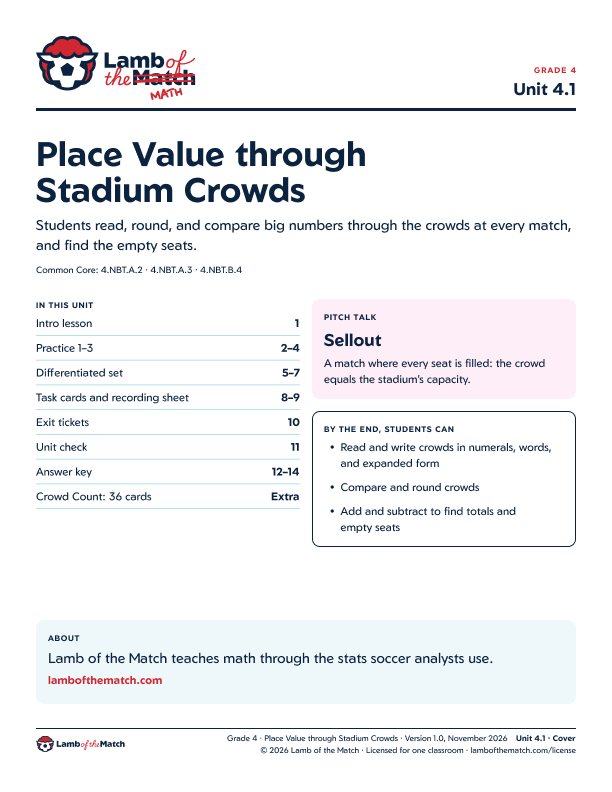
Grade 4 · All units
The Grade 4 Bundle
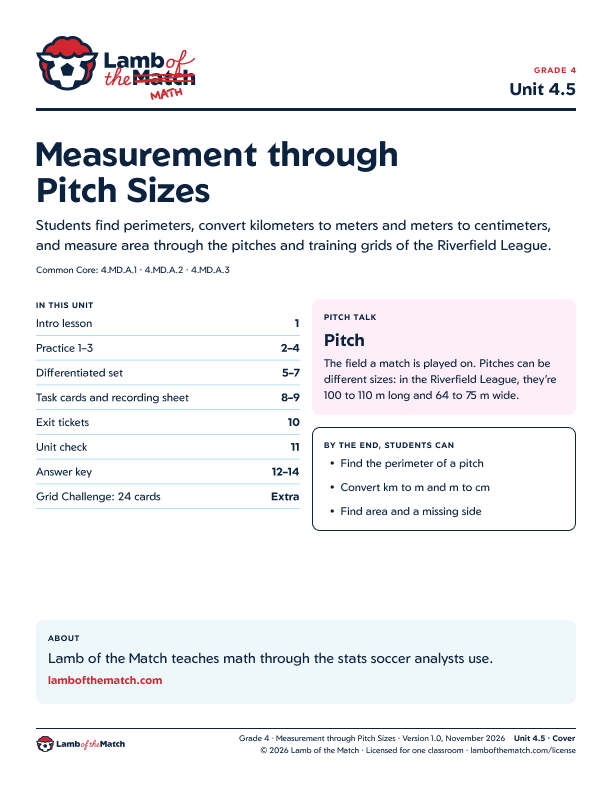
Every Grade 4 unit, from stadium crowds to pitch sizes. Five units for the price of four.

Grade 4 · Unit 4.3
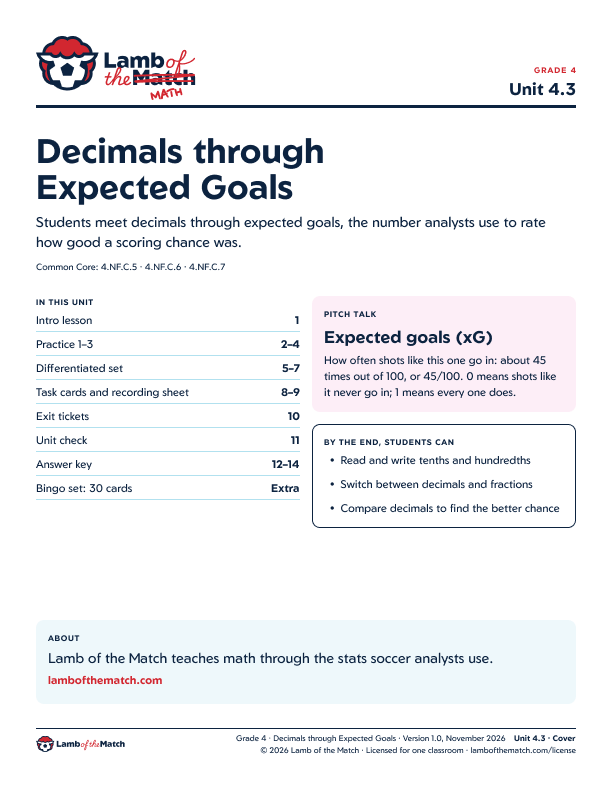
Students meet decimals through expected goals, the number analysts use to rate how good a scoring chance was. Four lessons, all set in the Riverfield League.
Print-at-home PDFs, licensed for one teacher’s classroom. Final sale once downloaded; see returns and refunds. Your order email has the download link.
What kids learn
Three Grade 4 Common Core standards, each practiced with numbers from a soccer season.
Write a shot’s expected goals three ways: 0.45 is 45/100, or forty-five hundredths.
Turn tenths into hundredths and add them, the way two shots add up to expected goals: 3/10 + 8/100 = 38/100.
Rank shots from best chance to worst, and explain why 0.4 is greater than 0.38 even though 38 is greater than 4.
The stat behind it
Expected goals rates how good the chance was, not how well it was finished. If shots like it go in about 45 times out of 100, analysts write 0.45. Every one of those numbers is a decimal, so the stat makes a natural place to learn tenths and hundredths.
Read the full explainer0.45
= 45/100 = forty-five hundredths
Try one
The challenge question from the unit’s third practice page. Every problem is set in the Riverfield League, with shots and scores from a full season.
The Robins’ best chance of the season was a shot with 0.79 expected goals, and they missed it. Was it a good chance? Explain using hundredths.
Yes: 0.79 = 79/100, so shots like it go in about 79 times out of 100. The finish was poor, but the miss doesn’t change how good the chance was.
What’s in the pack
Print-at-home PDFs: an intro lesson, three practice pages, a differentiated set at three levels, 12 task cards with a recording sheet, exit tickets, a unit check, a 4-page teacher guide, a 3-page answer key, and Expected Goals Bingo.
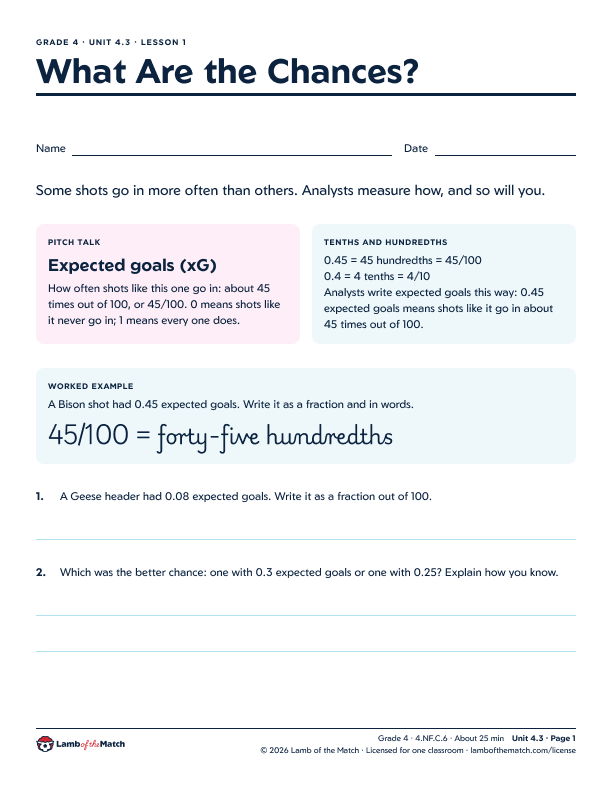
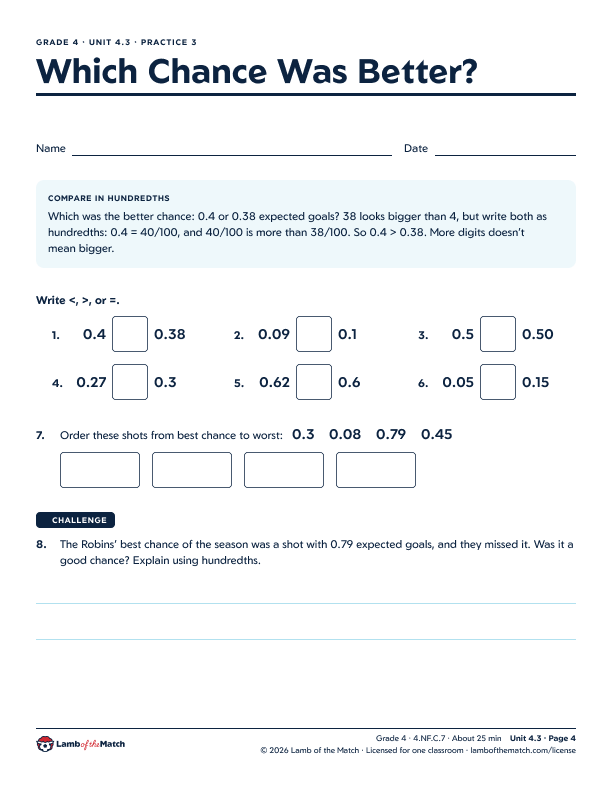
An intro lesson with a Pitch Talk on expected goals, then three practice pages.
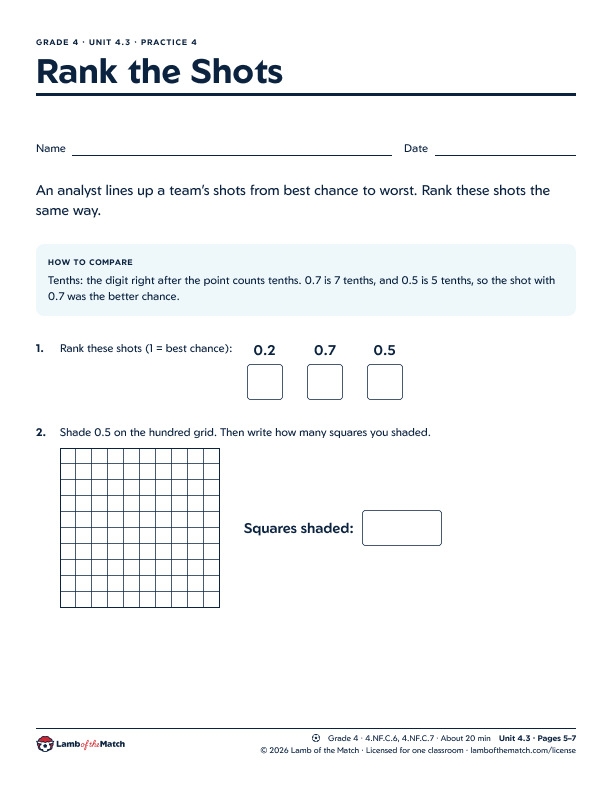
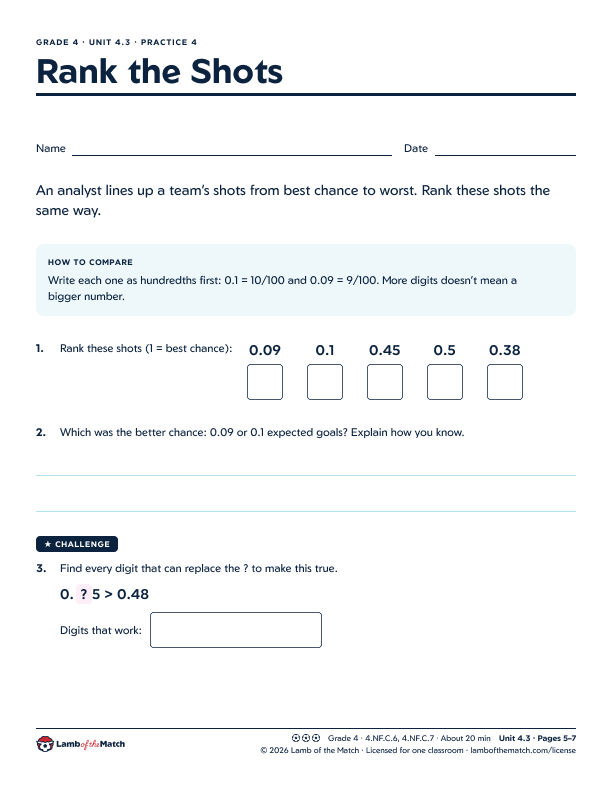
One ranking task at three levels, so the whole class can discuss it together.
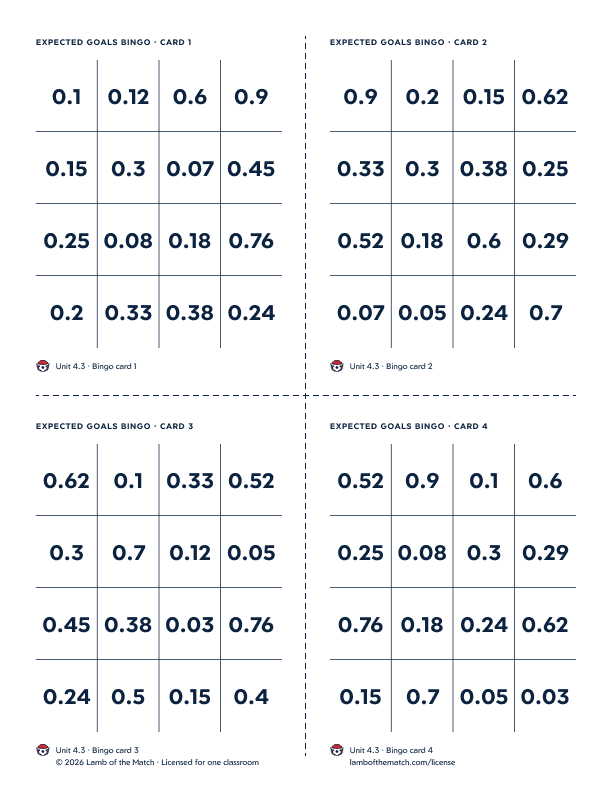
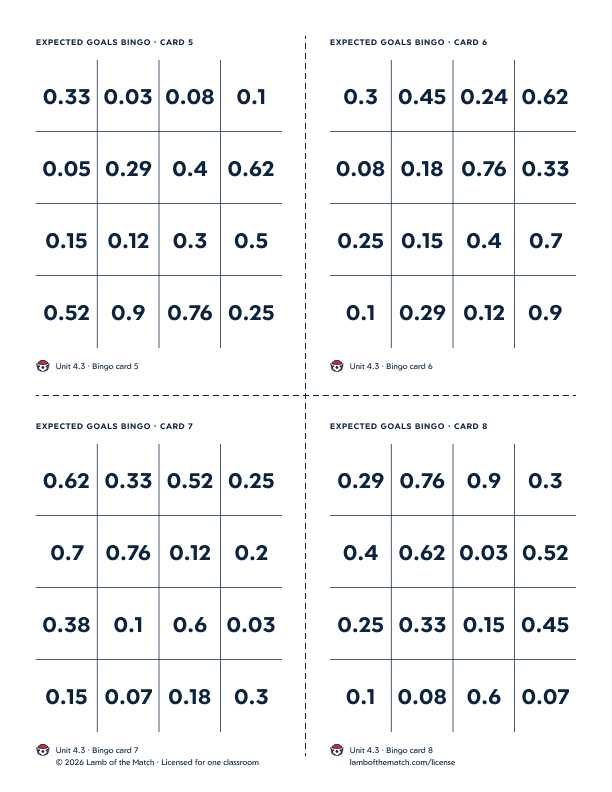
The caller reads a value as a fraction or in words, and players mark the matching decimal. Four cards per sheet.
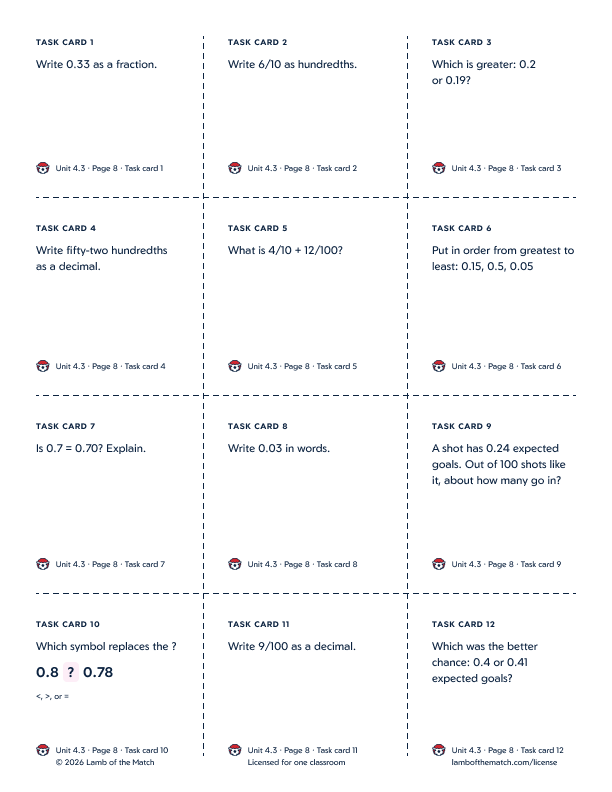
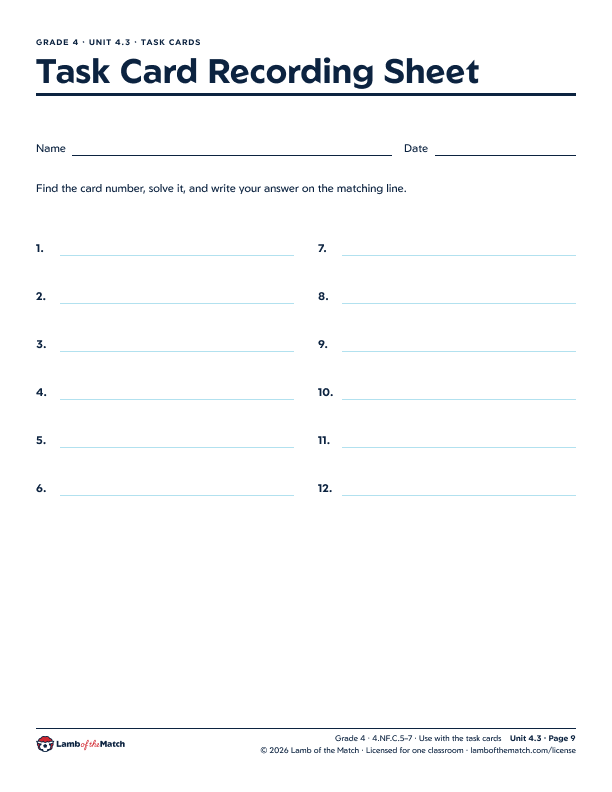
Cut-apart cards for centers or a scoot game, 12 in all, with a recording sheet.
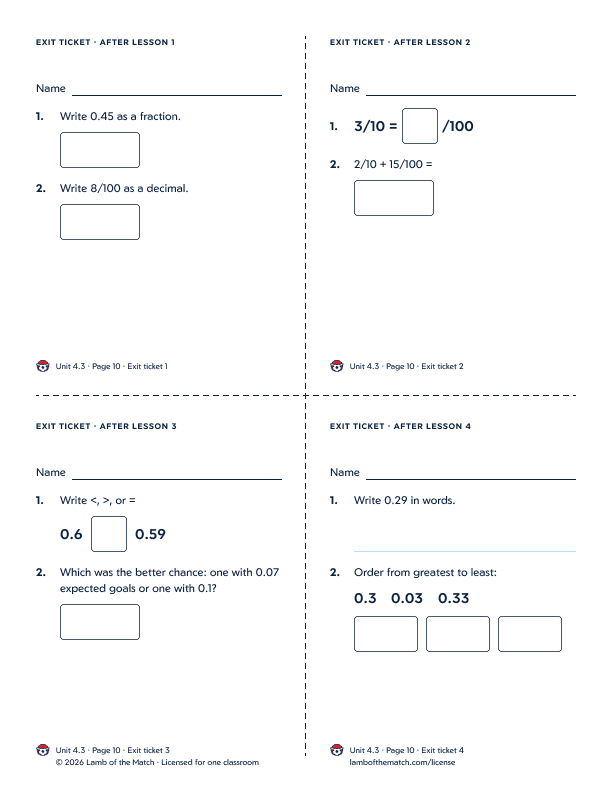
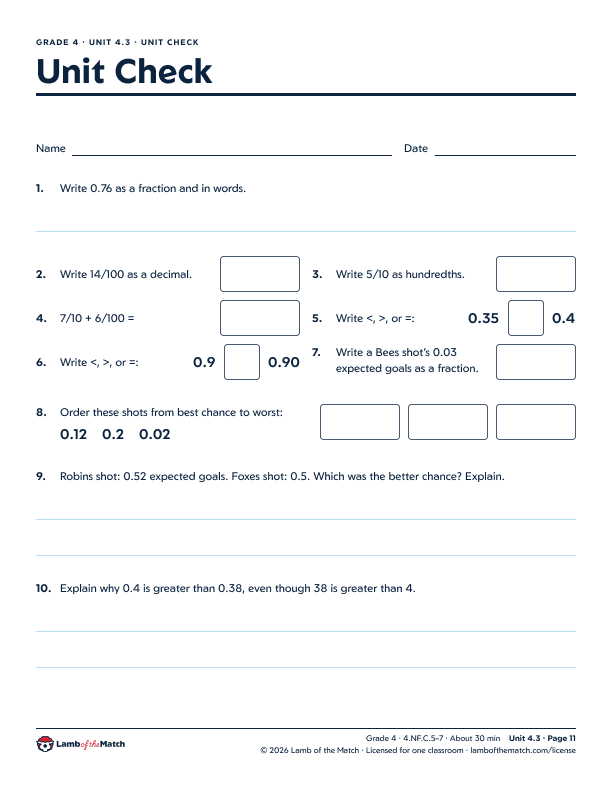
A quick ticket after each lesson, then a 10-question check to close the unit.
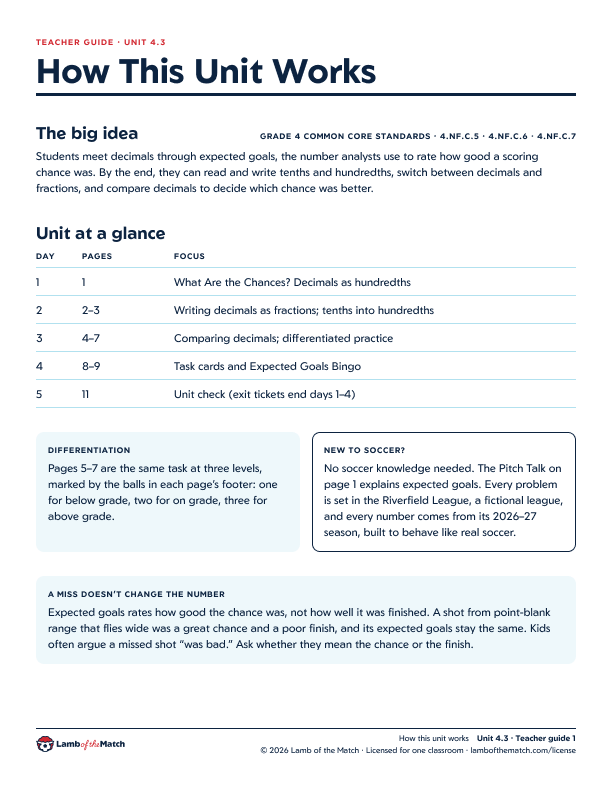
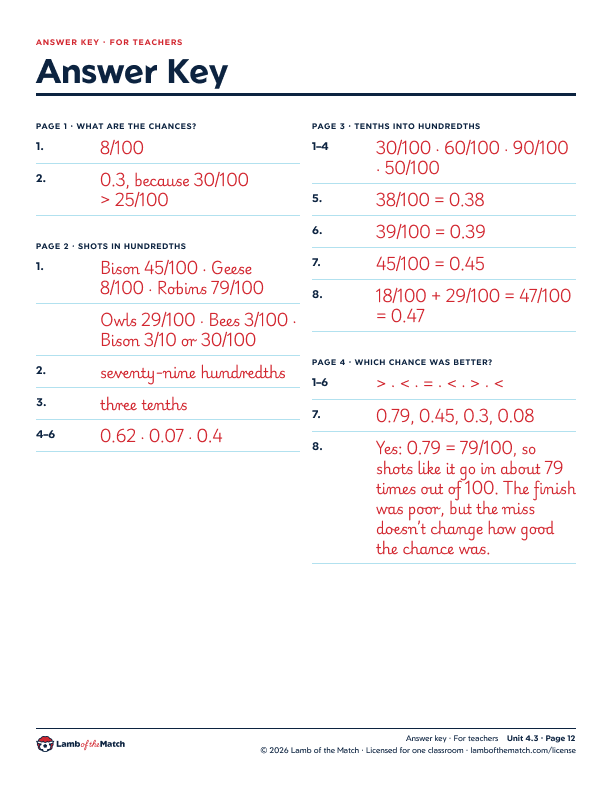
Lesson notes, the bingo caller list, and every answer handwritten in red.
For teachers
Each lesson ends with a quarter-page ticket, so you can see who has it before moving on.
Everyone works on the same task at their own level. Only a small mark in each page’s footer shows the level, so the class can discuss it together.
Students add tenths and hundredths as fractions. Adding decimals directly waits for Grade 5, so it never appears.
A Pitch Talk explains expected goals on the first page. Kids who love the game just get more to talk about.
Where it fits
Five units per grade, each built on a different soccer number. Grade 4 is out now, and Grades 3 and 5 are next.
Print-at-home PDFs, licensed for one teacher’s classroom. Final sale once downloaded; see returns and refunds. Your order email has the download link.
Five units per grade
Grade 4
Pick up the next unit, or get the whole grade for the price of four.
Grade 4 · All units
Every Grade 4 unit, from stadium crowds to pitch sizes. Five units for the price of four.
Grade 4 · Unit 4.2
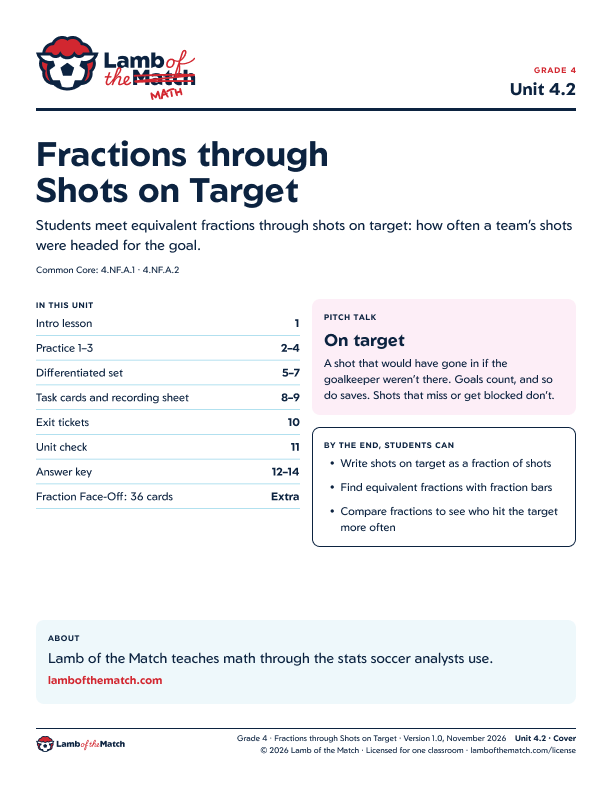
Shots on target out of total shots: equivalent fractions and comparing fractions.
Grade 4 · Unit 4.4
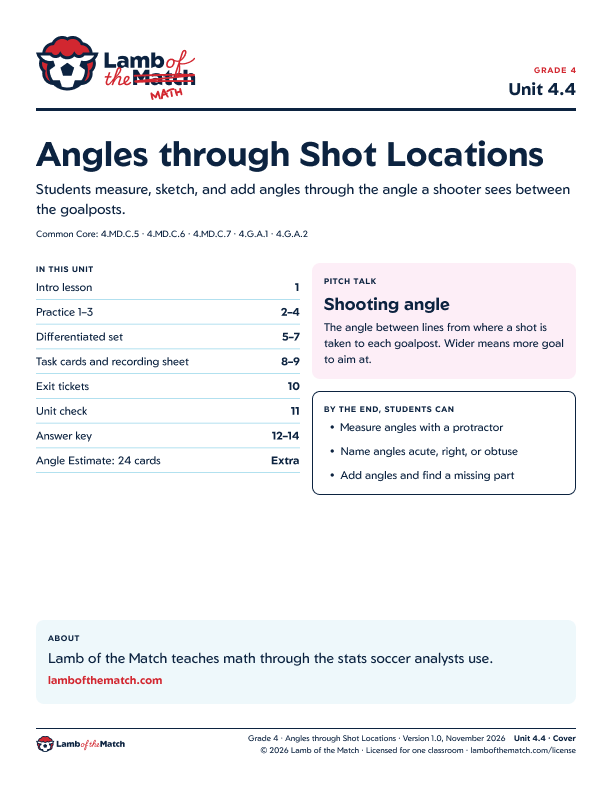
How much of the goal a shooter can see: measuring, drawing, and adding angles.
Your cart is empty.
Find a lesson for your class, or something to wear to the match.